
Your Ambition.
With Clarity and Calm.
I partner with high achievers who want to lead more effectively and create more authentically.

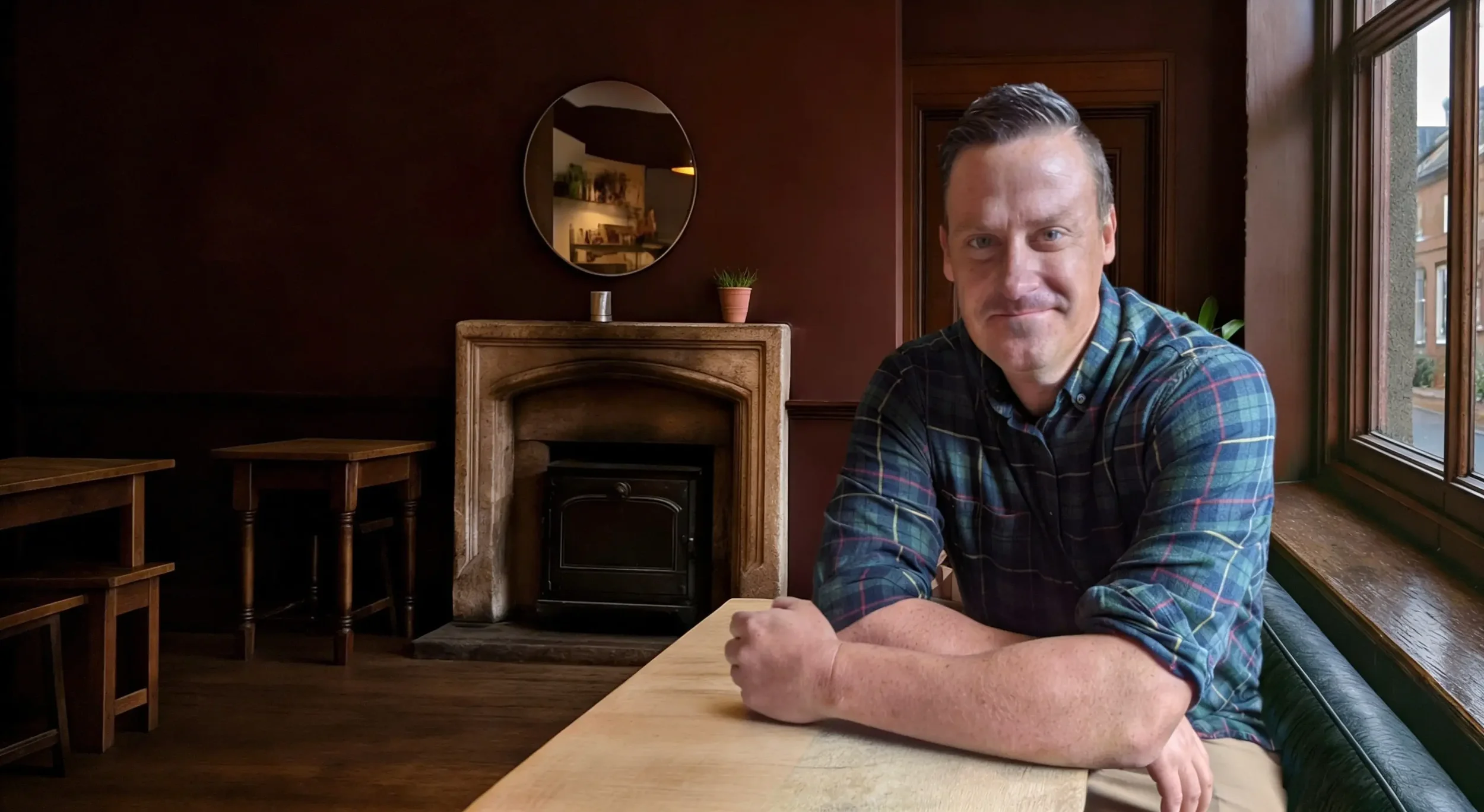
Hi, I’m Lloyd.
I help ambitious people lead and live from a place of increased clarity and calm. There is a world beyond the constant perfectionism and urgency. When you get there, you’ll find you’re more effective, more creative, and enjoying more deeply.
I’ve walked that path myself. I spent my first career in elite performance: serving in the Army’s special operations community, earning a PhD, leading teams as a senior presidential appointee, teaching as an Endowed Chair for Strategy, and leading within a startup technology accelerator. I’ve lived Type A.
I’m now in Granada, Spain, partnering with high achievers who are thinking boldly and authentically about the intersection of performance, fulfillment, and mental freedom.

Graduate from Grinding
In leadership and in life, your mental world is the highest leverage asset that you have.
If yours is harried, noisy with urgency, and filled with mild disappointment, your work, leadership, and life will reflect that. If yours is quiet, strategic, creative, and inspiring to others, your work and life will reflect that.
Whatever outcomes you’re currently experiencing, your present mindset is the perfect formula for producing them. The people who are truly “winning” aren’t grinding harder. They’re creating more clearly.
Who I Work With

Leadership
I partner with leaders who realize that what got you here as a performer (i.e. Type A ambition) won't get you there as a leader (i.e. unlocking the performance of a team). Type A can create fantastic performers, who often struggle to unlock sustainably high performance in others. Leadership is a different sport, requiring different skills. I can help you define yourself as a leader, and build that version of you.
-
It is in unlocking the sustained performance of a team—whose collective potential dwarfs that of any leader—that leadership finds both its success and its meaning. Leaders don’t just set strategy and drive operations. They unlock the excellence of their people. They create elite cultures of performance, belonging, and creativity. They don’t do that by pushing harder. They do it by leading better.
Most leadership approaches attempt to optimize behavior. I work further upstream—internal to the leader, in their clarity, their core relationships, in the culture they exude— because that is where authentic leadership is forged. You cannot help but bring your shadows, perfectionism, and internal noise into your leadership and your team. They stifle your creativity and relational power. You'll be more effective as a leader—and happier—when you start running on better fuel. We work together to integrate your Type A drive with internal clarity, self mastery, and relational intelligence, allowing you to create and lead, rather than push outcomes.allowing you to create and lead, rather than push outcomes.

Life
Second, I partner with people redefining “success” in their internal and personal lives. Often these are people who have succeeded in professional life, but for whom chasing more of the same has become inauthentic. I help them define the transition from Type A into their next great adventure.
-
The Type A model can be great for early life, when your core function is solo performance. That model comes under increasing strain as you grow relationally, becoming a leader, a spouse, a parent, a creator. It’s also tiring. At some point, the Type A model either evolves or stalls—personally and professionally.
I’ve watched brilliant people burn out, hollow out, or fracture their core relationships at the peak of their professional success. Alternatively, I've watched people transform from perpetually “chasing more” into broader and deeper forms of success, and have walked that path myself.
I can help you identify and diversify the meaning of "winning" and "excellence" in your life, in ways that reflect you more authentically. We start by quietly asking bigger questions, and answering more candidly.

Don't Trade.
I’ve seen that you can increase your effectiveness as a leader, ability to scale and sustain, and your happiness—simultaneously. These aren’t tradeoffs you must choose between. They are rowing in the same direction.
It starts when you stop running long enough to hear yourself clearly.
What’s Wrong with Type A?
Nothing. Type A traits—high standards, urgency, competitiveness, personal accountability—do you great credit. They often produce exceptional individual performance, especially in the early phases of life.
Your Type A has probably served you well. But, in the major areas of creating, connecting, leading, and living, moving Beyond Type A can take you further.
-
As we mature, we generally move from a life measured by individual performance to one defined by more complex, relational endeavors. Professionally, we move from individual performance to leadership—unlocking the performance of others. Personally, we become partners, spouses, and often parents. In both movements, Type A ambition, as a single source fuel, becomes less relevant, or even maladaptive. To optimize in that new world, that powerful Type A drive needs to be integrated with new dimensions.
More specifically, as people move from performer to leader and creator, two predictable challenges tend to emerge.
In leadership: As responsibility expands from personal output to leading complex human systems, Type A performers often drive people rather than lead them. True leadership unlocks others’ performance through shared vision, strong relationships, culture, and mutual trust. Type A fuel—especially when expressed as impatience, control, and constant pressure—often undermines those conditions. The result is teams that execute but do not fully engage, struggle with morale and retention, withhold candor and creativity. At the top is a harried leader who is spread thin, often “doing everything” rather than shaping incisive strategy and a culture of high performance. Often, such teams can’t scale, because the boss is the limiting factor. Eventually, strategy and adaptation start faltering, as the captain is too far down in the operational weeds, and too tired to think creatively.
In life: For many, the strategies that once drove professional success begin yielding diminishing returns. They feel the sense of adventure and meaning starting to fade, or burn out. They may know how to compete and win at work, but not how to enjoy their success. Outside of work, they often struggle to define equally engaging pursuits or a sense of freedom. Type A has taken them as far as it can, but now life is asking them a more diverse set of questions (in purpose, in family, in meaning, in recovering a sense of adventure). The old methods no longer map cleanly onto the new stage of life.
In either case, If you’re trying to unlock your leadership, restore your creative clarity, or broaden your definition of “success,” we may be a fit.

What is “Beyond” Type A?
Beyond Type A doesn’t mean "Comfortably Type B." Your drive and ambition are authentic. They are part of the solution.
This work is not about dreaming smaller. Quite the opposite.
It’s about upgrading the internal operating system that defines your vision of success and powers your performance. It's about running on cleaner fuel.
-
Leadership
The post-Type A leader has graduated from being the team’s star player, head coach, and general manager simultaneously. That doesn’t scale, isn’t sustainable, and frequently isn’t strategic (or fun). They instead become the captain of the ship: setting direction, modeling standards, asking the right questions, and investing in the people and system. Internally, this leader has graduated from forever feeling “behind.” This allows them space to become more relationally and strategically focused. Externally, they invest and delegate into their core relationships, the center of gravity for unlocking elite team culture.
Life
In personal life, this is someone redefining success, on their own terms. They are moving on from harvesting of trophies and titles. Perhaps it is how to actually feel at home in the material success they’ve created. Perhaps it is finding new purpose and meaning, akin to David Brooks’s Second Mountain. Perhaps that is defining the next great adventure. Perhaps all they know is that “more achievement” isn’t it. In any case, they have moved beyond “professional performance” as the center of their identity. This feels like moving from a collection of “shoulds,” to someone prioritizing authenticity and mental freedom.
The Process
The work is bespoke, typically biweekly, as it fits your schedule. I show up with four things: a fully confidential space, deep presence, experience in elite performance, and braver questions. I don’t have the answers—you do, often buried under the noise and habit.
Shoulder to shoulder, we uncover them in a space high performers rarely get, but quietly need: outside the performative conversations of daily life, where they can see themselves clearly, where they can think more creatively.
We ask radically candid questions. We find more authentic answers, without the internal propaganda. We follow those answers, redefining what is possible in your life and leadership. From there, we build the next version of you.
-
Done well, it feels like an unfair comparative advantage, the focused attention of a second elite performer, helping you uncover the biases, blind spots, and unexamined assumptions that quietly shape your decisions, your leadership, and your life.
The premise, borne out in my life, is that this kind of radical internal candor simultaneously unlocks your performance (particularly for leaders and creators), while also helping you define more authentic, enjoyable ways to live. As you become more internally clear and congruent, you live, lead, and create more effectively. That isn’t magical or mystical. It’s perfectly predictable.

Rates
We partner on a monthly retainer basis. This includes our coaching sessions as well as the time I invest outside those meetings for preparation, reflection, follow-up, and support you need between sessions. I ask for a three-month commitment to the work, after which we go month to month.
The standard retainer is $2,200 per month for bi-weekly sessions (two per month). For clients who commit to six months or longer, the rate is $1,800. For clients who can’t support the full rate, I offer a small number of sliding-scale arrangements. At times, a situation may call for increased cadence; when that happens, we’ll handle it pragmatically.
If you’re curious about working together, reach out. We’ll explore what makes sense, and build something accordingly.
Frequently Asked Questions
-
In my experience, one person benefits greatly from strong coaching: someone attempting a significant upward movement. Personally or professionally, the Talent (i.e. a client) that benefits from coaching is attempting to move from their current position to a qualitatively different destination.
If you experience strong coaching, after the first session you should be able to see why so many top performers hire coaches. The reason: it is a competitive advantage for achieving larger goals.
Coaching is not a mystical journey, led by a guru with esoteric knowledge. The reasons why it works are not mystery, and not magic. Coaching works because having a second intellect that you respect, in this kind of relationship, helps you think and act more effectively. The “relationship” here means that the coach is outside of your life—the conversation is not performative, not quid pro quo, and not “two-way.” It is dedicated entirely to you (not your boss, company, or family) and your vision. It is a confidential space with a second high-horsepower intellect that challenges you, says things and asks questions other people won’t, sees outside your blind spots and assumptions, and brings additional strategic acumen to your major decisions. It is a kind of conversation, on your life’s biggest questions, you can’t really have anywhere else.The person who has that will, all things equal, think and build more effectively than the person who doesn’t. In time, they will dream bigger. In my experience, the inner clarity and strength drive both higher levels of external performance, and more internal ability to enjoy them, in a mutually-supporting cycle.
Ten minutes of real coaching is better than writing you a lengthy description here. If you’re curious what real coaching is, book a free discovery session. There’s zero pressure or sales pitch—I’m not a salesman, and the only people I work with are those who are a great fit.
-
Calm, but direct. I’m friendly, but not your friend. While the space is safe, my job is to challenge you. If it doesn’t do that—if it feels like other conversations in your life—then I am not doing my job. Coaching should offer conversations that are qualitatively different—in their focus, depth, and candor—than you can have elsewhere. You can have interesting conversations at any café. This is different.
All great coaching is bespoke. I don’t come with answers. I come with wisdom and experience, an ability to listen deeply, and a lot of questions. Hard questions. You, “the Talent,” have the only answers that will be authentically yours. The answers are not some secret that I already hold. Rather, they are a mystery that both of us are trying to solve, shoulder to shoulder.
If it’s helpful, my intellectual foundations are a blend. The special operations community was foundational intellectually. While my academic work is in strategic studies, I’m a rather fanatical reader. The major intellectual pillars of my approach are in classical Greece and Rome, particularly Stoicism; Zen and 30+ years of meditation practice; and Existentialism, particularly Camus. Creatively, I’m a follower of Rick Rubin. These have formed, for me, a model of living that has kept me in a consistent upward spiral.
That said, my own intellectual interests are of secondary importance. They matter only to the extent they allow me to ask you interesting questions. What matters is your answers, how authentically they reflect you, and how well you can live them in the moments that matter.
-
This depends almost entirely on the person you currently are, the audacity of your goals, and how well we work together.
That said, you should be having “aha moments” by the end of the second session. If not, we’re not a strong fit—and that’s fine. Like you, I’m only looking for strong fits. Happy to point you towards other people, resources, and modalities that would better serve you.
-
On average, six to twelve months, depending on the boldness of your goals.
That said, some relationships last longer, depending on one question—are you still getting an ROI beyond the value of the investment? The only reason to continue is a resounding “yes.”
When we’ve reached a point of completion, we’ll debrief, reflecting on the distance run and the way ahead. If a future day comes when you’re wanting to dream wildly and build strategically again, we can square the guns for a new goal.
-
While Type A was defined by cardiologists in the 1950s to describe mindsets correlated with coronary risk, I define it here more simply: “Achievement Obsession.” This captures both its strengths and limitations.
The "Type A" profile describes high-energy individuals, on a spectrum that is defined by intense goal orientation, competitiveness, and a chronic sense of urgency. For these leaders, identity is often fused with professional performance, leading to a relentless pursuit of results that often values speed and action over contemplation and clarity. While these traits can catalyze early career success and rapid execution, these natural strengths eventually reach a point of diminishing returns as complexity and scale increase.
That drive can build companies — or burn them down — depending on how it’s managed. In the relational sport of leadership, constant Type A driving can erode mutual trust, resulting in teams that execute but do not fully engage, are creatively stifled, and eventually have high turnover. Personally, the "grind" often leads to burnout and a sense of fading adventure, where individuals find they know how to compete for success but not how to enjoy it.
-
We build each session, and our relationship as a whole, from scratch. That said, here are some broad models I’ve pursued successfully in the past.
Performance Coaching. We dive deep on your professional or personal dream: questioning and defining the desired end state; conducting strategic and operational planning; identifying obstacles, threats, and risks; mapping out human networks; defining contingency plans and adaptations. We set concrete long-term goals, break these into short/mid milestones, and get after it. I hold you accountable to your vision. Relatedly, we work on optimizing your performance and sustaining at that level. Like elite athletes, this includes how to replace anxious energy with calm clarity, thinking about burn rate and recovery, and optimizing over the long arc for output, creativity, and energy.
The Internal World. Internal clarity breeds external success. People focus a great deal on external goals. What are your goals internally? How do you want to feel? Don’t give the easy answer—when, and more importantly why, are you most authentically thriving? External goals are just means to ends. What are the actual ends, the drivers of meaning, that animate your goals? This is an investment in how well you know yourself, and the deep architecture of what makes you sustainably thrive. Winning and creating consistently at the elite level is, counterintuitively, not the product of an unblinking focus on victory. They are a byproduct of authentically thriving, which brings energy and creativity beyond what externally-facing ambition could ever sustainably generate. Internal clarity and strength will increase your external triumphs, sustain them, and simultaneously make them more enjoyable.
Leadership. Much of modern leadership is about deep emotional intelligence, allowing you to unlock the potential of your team and, in essence, craft meaning and culture. This kind of emotional intelligence can’t be faked ad infinitum. It implies deep inner clarity (see above), and the ability to lead with authenticity-i.e. mixing vulnerability and ferocious dedication to your people with traditional forms of strength and strategic clarity. You want to build teams that are fiercely committed to you personally, as you are to them. The leader who has this will outperform the leader who does not—enjoying both higher morale and higher performance.
The Second Front of Family. Just as Type A fuel is incomplete for leading a team, it is incomplete for leading a family. The major muscle movements of domestic life—finding a partner, starting a family, being a brilliant spouse and parent—require of you new skills and ask you new first-order questions. Further, many Type A performers must answer these domestic questions in a way that aligns with huge external ambitions. One of the biggest threats to your external ambitions, and more importantly, the internal happiness of you and those for whom you are most responsible, is the frequency of divorce or enduring suboptimal partnership. Eighteen happy years and two thriving kids into a high-performance relationship, I can help you build a second front that nests authentically with the first.
Shadow Work. Where are you weak? Are you brave enough to go there? When are you at your worst—and how do we help that version of you, so that they don’t slow you down? This type of internal work helps high performers enhance and sustain elite performance. An ambitious life almost guarantees repeated Edison-like failures—with no guarantees of Edison-like tenacity. How do you deal with failure and shame? Do you approach them with a hammer, or with a flashlight? How can you judo loss into strength? Most Type A people avoid this kind of work, trying to convince themselves (and the world) that there are no shadows. That doesn’t work. In my experience, not only is that no fun (and it isn’t), but that kind of internal mud eventually erodes external performance. It also leads to people who win but can’t enjoy winning. In total confidentiality and mutual candor, I can help here.
Manhood, Duty, and Hedonism. I’ve read and thought deeply about modern manhood, and the relationships between duty, meaning, freedom, and authenticity. Like all good coaching, my own answers to these questions are irrelevant. But I’ve thought deeply about them, from Sartre and Onfray to Brooks and Rohr and back again. In many ways, from the Ranger Regiment to today, my life has been the pursuit of an authentic modern manhood. I would be excited to invest with you on defining yours, on your terms.
Meditation. I started meditating at sixteen, not because I wanted to commune on some astral plane, but because I wanted something to help me face the physical suffering of Ranger Regiment selection. I had seen the Rage Against the Machine cover with the burning monk, and thought, “If he can do that, they must be on to something.” From that start, I’ve spent three decades on the cushion, to decrease the noise level in my brain, increase my performance and stamina, and train myself to react powerfully to sudden change and emotion. I can help build you here.
On Your Mind. What major questions are you wrestling with right now? What are the major questions you must answer to have the future you envision? What are the greatest threats to that future, and how do we overcome or minimize them? Who must you become? You tell me what questions you’re pursuing, and we’ll see if we’re the right fit.
-
Possibly. Let’s discuss. Group facilitation is bespoke, tailored to your exact needs. I would need to hear exactly where your team is, and what kind of movement defines success. Once we’re clear on this, if I’m not the right guy for that work, I have a network of strong facilitators—perhaps one of them would be a powerful match.
At a minimum, a facilitation is $1K for a one-hour session, inclusive of vision meeting, prep, session, reflection, and post-session support.